
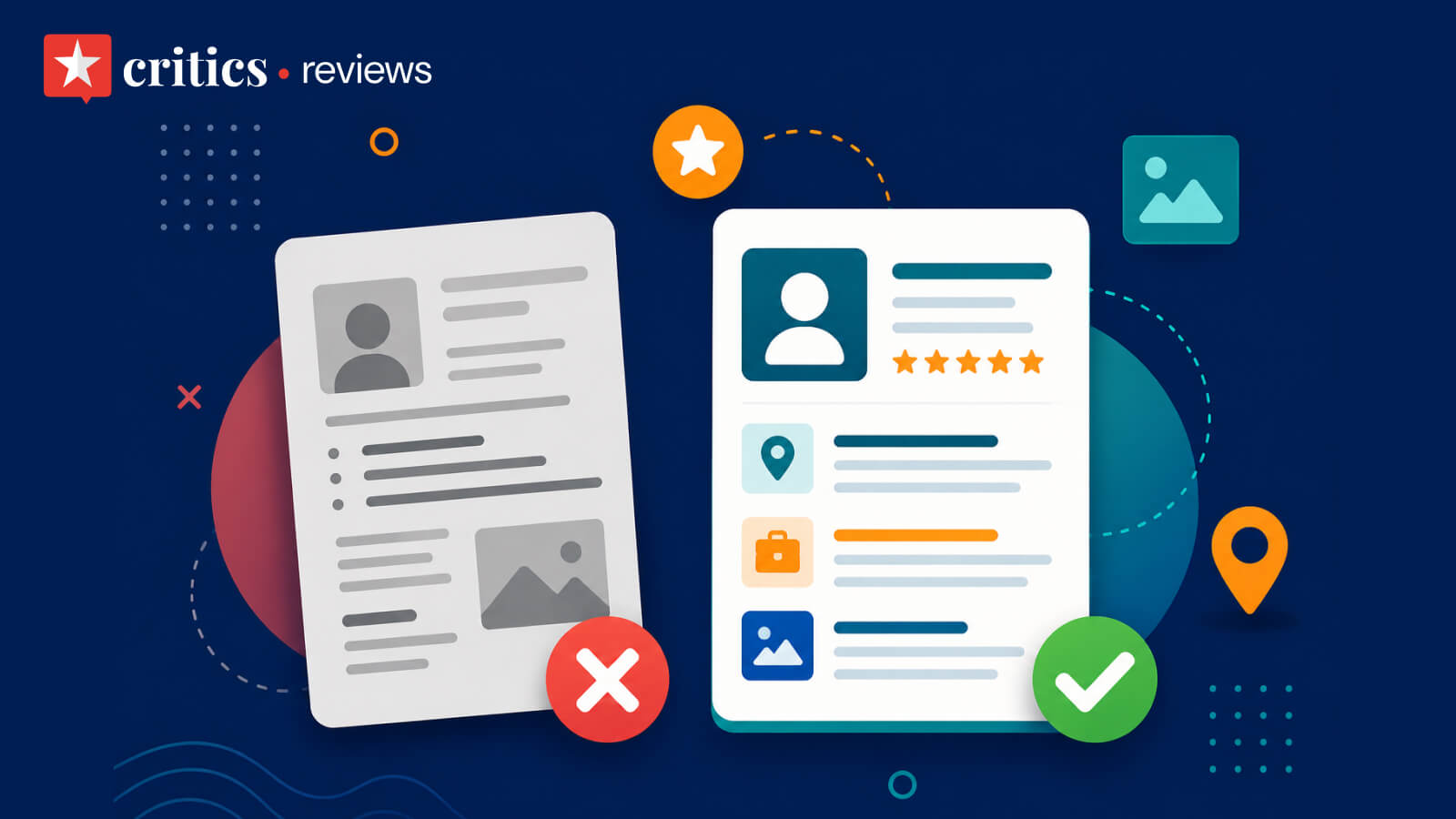
Think of a business listing as a resume. Nobody would hand a recruiter a resume with a fake job title, a blurry photo, and a phone number that doesn't ring — yet that's exactly what thousands of businesses do every day on directory platforms. The result isn't a neutral non-event. A sloppy or spammy listing actively damages trust with both customers and search engines, and it's often worse than not being listed at all. Below are the ten most common mistakes we see businesses make when creating a listing, and what to do instead.
1. Treating Listings as a Link-Building Checkbox, Not a Business Asset
A lot of businesses hire an SEO executive or agency whose main KPI is the number of backlinks built, not the quality of the business's online presence. To hit that quota quickly, the easiest shortcut is to mass-create accounts across dozens of directories, filling in the bare minimum, and hoping the listing slips through moderation before anyone checks the details. This is exactly backwards. A directory profile with a placeholder description, no real contact information, or mismatched details doesn't just fail to help — it actively signals spam to both moderators and search engines, and can get the business's other legitimate listings flagged by association. A single well-built listing on a reputable platform is worth more than fifty rushed, empty ones. If a listing can't be filled in properly, it shouldn't be submitted at all — an incomplete or reckless listing is worse than no listing, because it's often the very first impression a potential customer gets of the business.
2. Keyword-Stuffing the Business Name Field
Some business owners, or the SEO executives working on their behalf, try to squeeze extra keywords into the business name itself — something like “Best Web Design Company Delhi | Cheap SEO Experts” instead of the actual registered name. Directories exist to represent real businesses accurately, so listings like this are almost always rejected or blocked outright during moderation. Even when they do get approved somewhere, they damage credibility the moment a customer notices the mismatch between the listing and the business's real name on its website, invoices, or storefront. The fix is simple: use the legal or trading name only, exactly as it appears elsewhere. Keywords belong in the description and category fields, not the name.
3. Copy-Pasting the Business Description From the Website
A description written for a company's own homepage assumes the visitor already knows who they are and how they got there. Someone reading a directory listing is in a completely different context — they're often comparing four or five competitors side by side on the same page, deciding who to click through to. Pasting the same paragraph from the “About Us” page rarely answers the question a directory visitor is actually asking: “why this business, right now?” Before writing a description, it's worth thinking through which platform it's going on, what the visitor was searching for to land there, and what would actually move them to click “Contact” or “Visit Website” rather than the listing next to it.
4. Uploading a Logo That Doesn't Fit the Platform
Every directory has its own image dimensions and shape, whether it's a square avatar, a circular badge, or a wide banner slot. Uploading a logo designed for a website header straight into a square avatar field often crops off the parts that make it recognizable. A logo with a transparent background can also disappear or look broken if the platform's card is a similar color, or if the site switches between light and dark mode. Before uploading, resize the logo to the platform's recommended dimensions, and add a solid background fill if the original file is transparent and doesn't hold up against both light and dark themes.
5. Inconsistent Name, Address, and Phone Details (NAP)
search engines and customers both rely on a business's Name, Address, and Phone number matching exactly across every platform it appears on. A slightly different address format, an old phone number that was never updated, or a business name that's abbreviated on one site and spelled out on another all create the same problem: confusion. Search engines read inconsistent NAP data as a signal that they might be looking at two different businesses, which weakens the SEO value of every listing involved. Customers reading conflicting details lose confidence just as quickly, especially when the difference affects whether they can actually reach the business. Before creating a new listing, it's worth keeping a single reference document with the exact name, address, and phone number to copy from every time, rather than retyping it from memory.
6. Choosing the Wrong or Overly Broad Category
Category selection is one of the strongest relevance signals a directory uses to match a business with the right searches, yet it's often filled in carelessly. Picking a broad catch-all category like “Business Services” instead of the specific one that fits, such as “Digital Marketing Agency” or “Appliance Repair,” makes a business harder to find for the exact searches it should be winning. Choosing a category purely because it has a lot of competing businesses, or because it seems to attract more search volume, causes the same problem in the opposite direction — the listing shows up for searches it can't actually serve, which hurts engagement over time. Categories should describe what the business actually does, as specifically as the platform allows.
7. Leaving the Services or Products List Incomplete
A listing with only a business name and a one-line description forces potential customers to leave the page and dig through a website just to find out what's actually offered — and many won't bother. Listing every relevant service, with a short line explaining each one, lets customers compare offerings without leaving the directory, and gives search engines more specific, legitimate terms to index the listing against. An incomplete service list isn't just a missed opportunity; it's one of the easiest fixes on this entire list, since the information already exists somewhere in the business's own materials.
8. Missing, Broken, or Misdirected Website URL
Some businesses leave the website field blank entirely, assuming their directory profile is enough on its own. Others fill it in but link to the homepage when a more relevant landing page would serve the visitor better, or leave in an old URL from a previous domain that no longer resolves. A broken or missing link doesn't just cost a click — it quietly tells both the visitor and the search engine that the listing isn't actively maintained. It's worth checking every listed URL periodically, the same way a business would check that its own phone lines are working.
9. No Photos, or Using Irrelevant Stock Images
A listing with no photos, or with generic stock images that don't actually show the business, reads as unfinished or, worse, untrustworthy. Photos are one of the fastest ways a directory visitor judges whether a business is real, active, and matches what they're looking for. Real photos of the storefront, team, products, or completed work consistently outperform stock imagery, because they answer a question stock photos can't: is this actually them?
10. Treating the Listing as “Set and Forget”
Creating a listing is the easy part; the businesses that benefit most are the ones that come back to it. That means claiming and verifying the profile once it's live, updating hours and contact details whenever they change, responding to new reviews, and checking that the listing wasn't quietly rejected or flagged during moderation. A listing is a living document, not a one-time form submission — the businesses still getting value from theirs a year later are the ones that kept updating it, not the ones that filled it in once and walked away.
Conclusion
A business listing is a resume that works around the clock, and like any resume, it's judged in seconds. Spending twenty focused minutes filling one out properly — real name, accurate NAP, a tailored description, a properly sized logo, complete services, and real photos — will consistently outperform a hundred rushed listings created by an SEO executive chasing a backlink quota. Before creating your next listing, or auditing the ones you already have, run through this list. It's the difference between a profile that quietly builds trust and one that gets flagged, ignored, or rejected outright.
Add your business free or write a review for a business you have used.